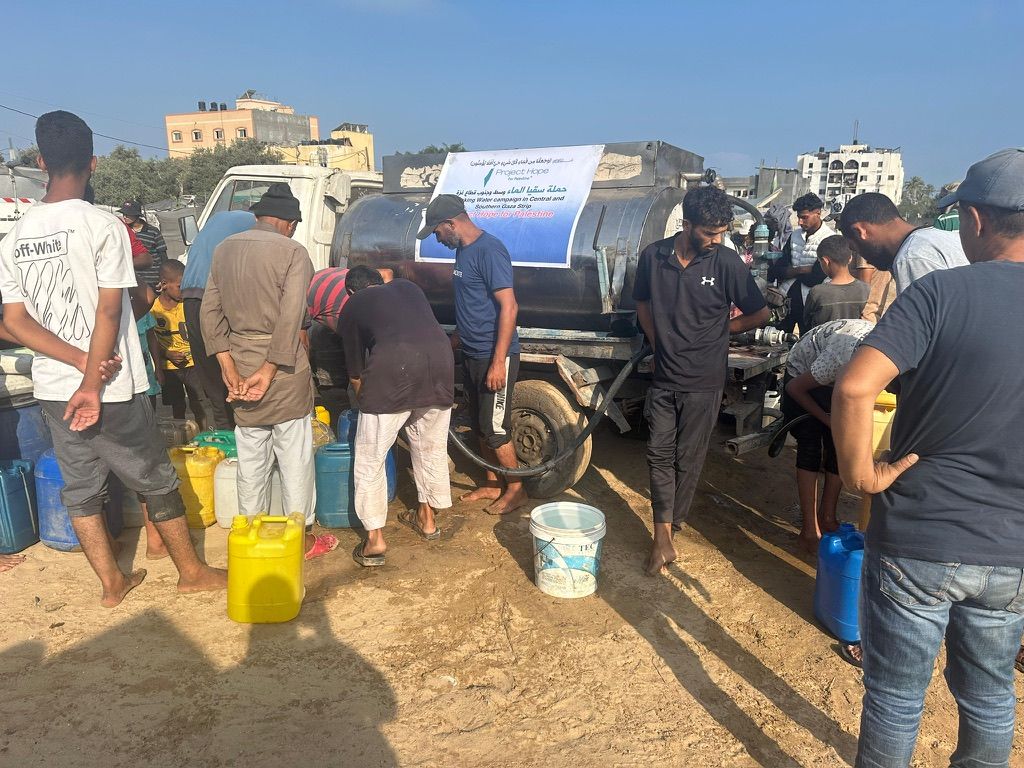
Water is the most immediate and most repeatedly needed necessity in a displacement setting. It is also the one that cannot be solved by a single delivery. A camp supplied on Monday is a camp that needs supplying again on Thursday, and the week after that.
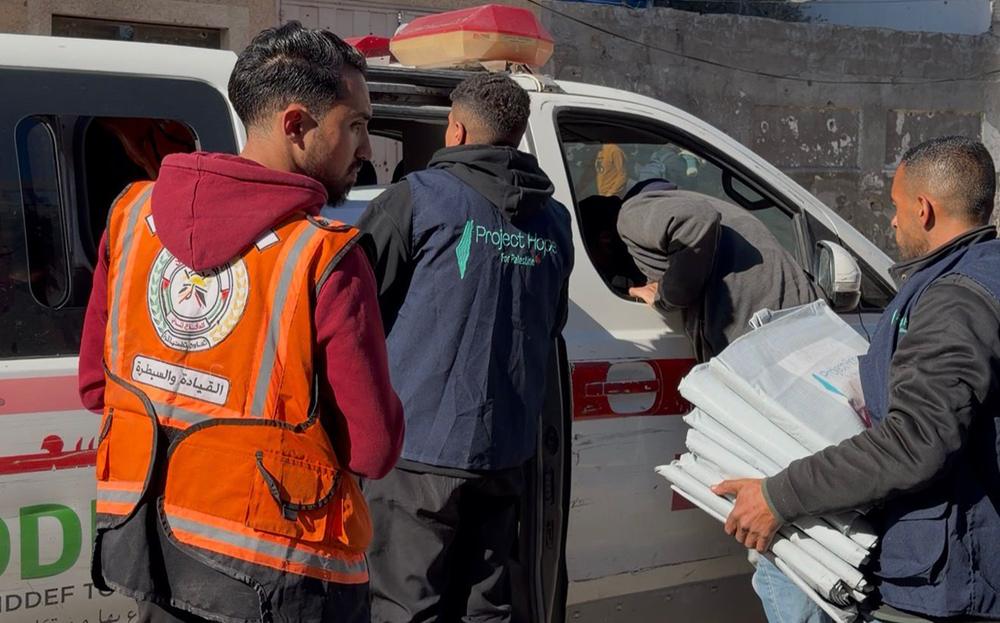
That is why the route matters more than the delivery. Our teams know which camps ran dry this week because they are in those camps — reporting from them, and living in them. A route is not planned from a spreadsheet in another country.
The tanker goes where the water ran out this week. Next week it will be a different camp, and we will already know which one.
How a run is put together
Each run is coordinated with the families and camp representatives before the tanker moves, so that the queue is orderly and the households that missed the last distribution are served first. The work is unglamorous and it repeats. That is the point.
On a normal day ten or more trucks are on the road, reaching more than two thousand families. The number moves with what is available and with where the need has shifted, which is the honest way to describe it.
If you want to support the water program specifically, you can direct a gift to it — and it will go onto the next run.